
Gas Leak Signs in Santa Ana: Urgent Safety Steps to Take Now
Natural gas is an efficient, reliable energy source that powers water heaters, central furnaces, kitchen ranges, and clothes dryers in thousands of Santa Ana residences. However, natural gas is an invisible, highly volatile hydrocarbon fuel. An unaddressed gas leak inside an enclosed residential structure creates an immediate catastrophic risk of explosion, structure fire, and carbon monoxide asphyxiation.
Because underground gas lines and in-wall threaded black steel piping age over decades, knowing the sensory warning signs of a gas leak and the immediate evacuation protocol is critical life safety knowledge.
The 3 Senses of Gas Leak Detection
1. The Sense of Smell: The Mercaptan "Rotten Egg" Odor
Pure natural gas (methane) is completely colorless and odorless. For safety, utility companies inject a harmless, highly pungent chemical odorant called mercaptan (methanethiol). If you detect the unmistakable odor of rotten eggs, sulfur, or decaying cabbage inside your home or around your gas meter, treat it as an active emergency.
2. The Sense of Sound: Hissing or Whistling Gas Pipes
A high-pressure leak in an appliance flex line, gas valve, or threaded union produces a distinct hissing or whistling sound. If you hear hissing near your water heater or behind your kitchen stove when appliances are turned off, gas is actively venting.
3. The Sense of Sight: Dying Vegetation & Blowing Dust
Subterranean gas leaks beneath lawns or flowerbeds displace oxygen from the soil, causing patches of grass or plants directly above the pipe to turn yellow and die mysteriously. High-pressure underground leaks also blow dirt or dry leaves into the air or create continuous bubbling in standing puddles.
Immediate Life-Safety Evacuation Protocol
If you smell or suspect a gas leak inside your property, take these urgent steps:
- Evacuate All Occupants & Pets Immediately: Leave the building calmly and leave doors open behind you to ventilate the structure.
- Do NOT Touch Any Electrical Switches: Flipping a light switch, turning on a flashlight, operating a garage door opener, or even plugging in a charger can generate a microscopic electrical spark that ignites accumulated gas.
- Do NOT Use Your Cell Phone Indoors: Walk at least 150 feet away from the structure before making emergency calls.
- Call 911 and SoCalGas (1-800-427-2200): Notify the fire department and gas utility from a safe outdoor distance.
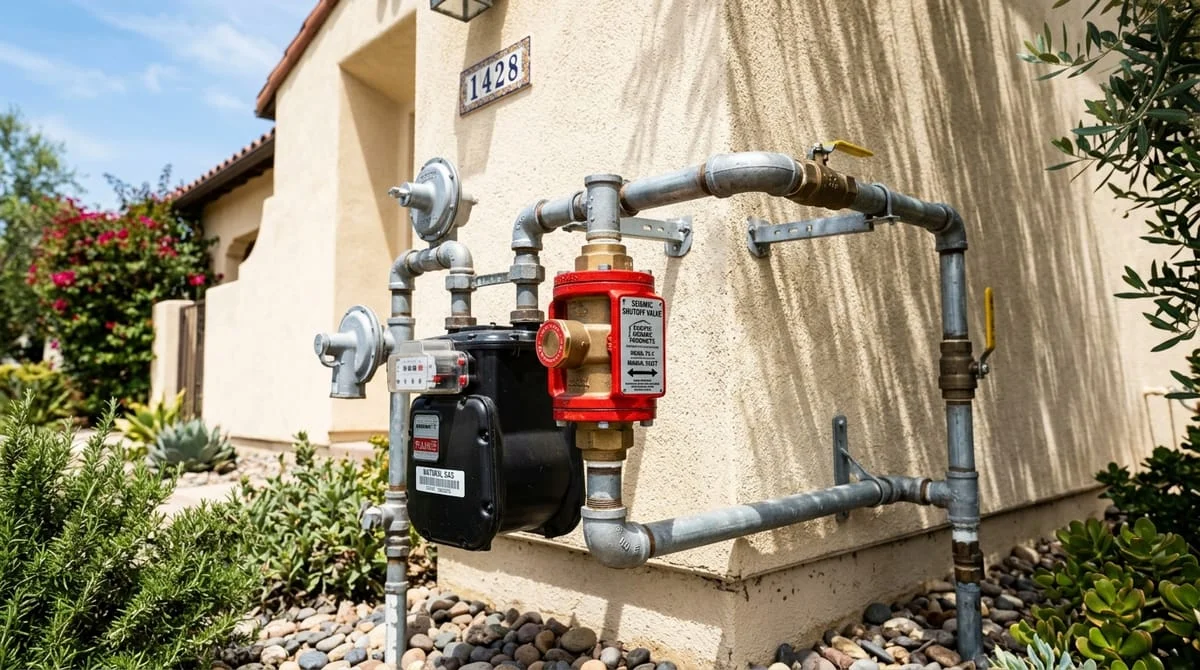
- Shut Off the Gas Meter If Safe to Do So: If your exterior meter is safely accessible outdoors and you smell no gas around the meter, use an adjustable crescent wrench to rotate the brass rectangular tang 90 degrees until it is perpendicular to the pipe.
Digital Manometer Pressure-Decay Testing Protocol
When locating minute hairline gas leaks that are too small to produce an audible hiss, our technicians perform precision digital manometer pressure-decay testing. We isolate the building gas system from the utility meter, cap all appliance stub-outs, and pressurize the Schedule 40 black iron gas piping with compressed air to 15 PSI (or 10 inches of water column pressure).
A certified digital manometer monitors line pressure over a 15-minute test window. Any drop in pressure confirms an active leak. We then apply specialized non-corrosive bubbling fluid and sweep electronic combustible sniffers along every threaded fitting and union to pinpoint the exact leak location for code-certified replacement.
Santa Ana Building Code Compliance & Master Plumber Standards
Plumbing work in the City of Santa Ana is governed by the California Plumbing Code (Title 24, Part 5 of the California Code of Regulations) and municipal health amendments enforced by the City of Santa Ana Planning and Building Agency. Whether performing combustible gas leak detection and steel line fitting, plumbing installations must meet stringent structural, health, and seismic standards.
At Santa Ana Plumber Pros, every technician is directly supervised by a licensed California Master Plumber (CSLB C-36 License #1049821). We hold comprehensive $2,000,000 commercial liability and workers' compensation coverage, ensuring property owners are 100% protected throughout the diagnostic, permitting, and repair process. Key standards enforced on every job include:
- Mandatory City Permitting & Inspection: Gas line repairs strictly adhere to California Plumbing Code Chapter 12 fuel gas piping standards, requiring electronic sniffer testing, Schedule 40 black iron pipe, and city manometer pressure tests.
- Lead-Free Materials Mandate: In strict compliance with California Health and Safety Code Section 116875 (AB 1953), all potable brass valves, solder fittings, and PEX expansion manifolds installed are third-party certified lead-free with less than 0.25% wetted surface lead content.
- Seismic Restraint & Ground Movement Allowances: Given Orange County's proximity to regional fault lines, all rigid piping runs incorporate flexible braided stainless steel or engineered expansion loops to prevent catastrophic shearing during earth tremors.
- Upfront Flat-Rate Written Proposals: You receive a clear, itemized written proposal before any physical work begins—featuring fixed pricing with zero hidden trip fees, zero portal-to-portal surcharges, and zero overtime penalties 24/7/365.
Frequently Asked Questions
Expert answers from our CSLB-licensed master plumbers on combustible gas leak detection and steel line fitting:
What does a natural gas leak smell like?
Utility gas is treated with mercaptan, giving it a distinctive sulfurous, rotten egg, or boiled cabbage odor that is easily detectable even at 1% concentration.
Can flipping a light switch ignite a gas leak?
Yes. Flipping an electrical switch generates a microscopic electrical arc between contacts. In a room with accumulated natural gas, this tiny spark is sufficient to trigger an explosion.
How do master plumbers test for underground gas leaks?
We use digital combustible gas sniffers calibrated in parts per million (PPM) and perform precision digital manometer pressure-decay testing down to 0.1 inches of water column pressure.
Need Code-Compliant Plumbing in Santa Ana?
Direct mobile dispatch across Santa Ana and Orange County. 25–40 minute local arrival with $0 overtime surcharges 24/7/365. CSLB Master Plumber License #1049821.