
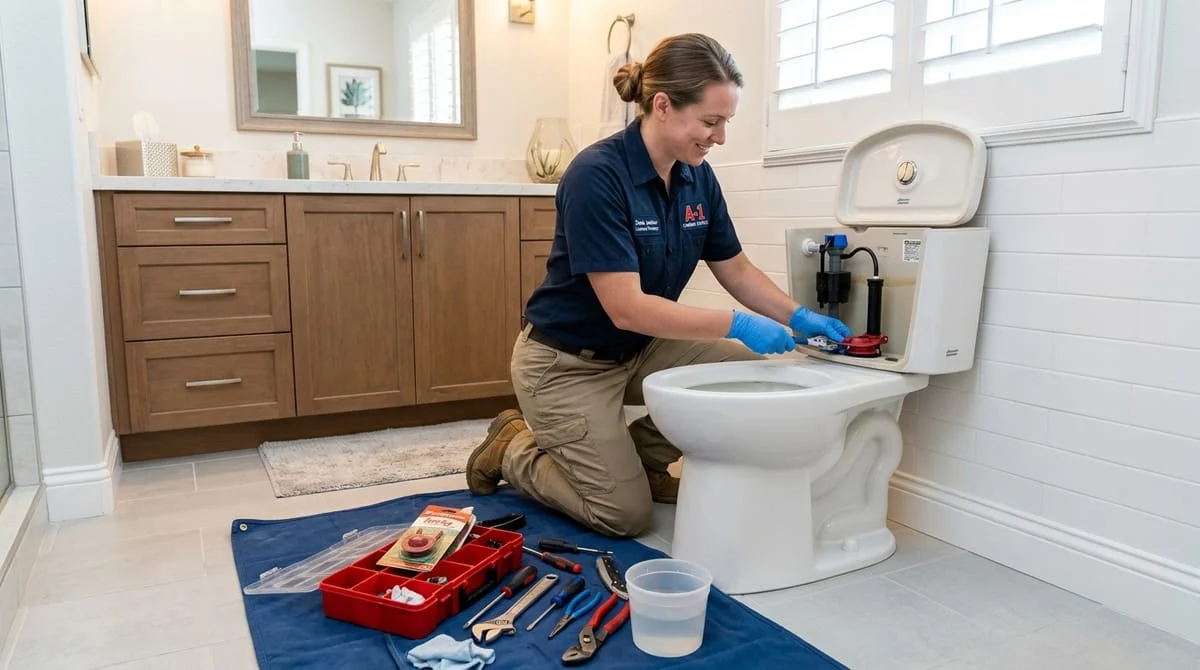
Toilet Keeps Running? The 5-Minute Diagnosis & Permanent Fix
The sound of a toilet intermittently hissing, refilling, or trickling at 2:00 AM is more than an annoyance—it is a continuous drain on your household budget. With California municipal water and sewer rates climbing, an uncorrected running toilet wastes between 200 and 400 gallons of clean drinking water every single day. Over a month, that single faulty fixture can dump 6,000 to 12,000 gallons of water down the sewer, adding $80 to $160 to your monthly City of Santa Ana utility bill.
Fortunately, in over 90% of cases, a running toilet is caused by one of three inexpensive, easily replaceable components inside the ceramic tank: a deteriorated rubber flapper, an improperly calibrated vertical fill valve, or an entangled lift chain. This guide walks you through diagnosing and fixing your toilet step by step.
The 3 Primary Culprits Behind a Running Toilet
1. Warped or Mineral-Encrusted Rubber Flapper
The flapper is the rubber seal at the bottom of the tank that opens to release water during a flush and seals tight against the flush valve orifice to allow refilling. In Santa Ana, municipal chlorine and high mineral hardness (18+ GPG) rapidly degrade standard rubber flappers within 2 to 3 years. The rubber softens, warps, and develops microscopic blisters that allow water to constantly seep into the toilet bowl.
2. Misadjusted Fill Valve Float & Overflow Tube Spill
The vertical fill valve (often a Fluidmaster or ballcock assembly) controls water refilling. If the float cup is adjusted too high, the water level exceeds the top rim of the vertical hollow overflow tube in the center of the tank. Water continuously spills over the open rim into the bowl, causing the fill valve to run non-stop.
3. Improper Lift Chain Slack
If the beaded metal chain connecting the flush handle lever to the flapper is adjusted too short, it holds the flapper slightly propped open. If the chain is too long, extra chain links get caught underneath the flapper seal when it drops, breaking the watertight barrier.
The Food Coloring Test: Definite Diagnosis in 15 Minutes
Perform this foolproof diagnostic test without tools:
- Remove the porcelain tank lid and set it safely on a towel.
- Add 5 to 6 drops of dark blue or red food coloring directly into the water inside the toilet tank.
- Do not flush the toilet for 20 minutes.
- Inspect the water inside the lower toilet bowl. If colored water has seeped into the bowl, your flapper or flush valve seat seal has failed. If the bowl water remains completely clear, your flapper is sealing properly, and the problem is an over-adjusted fill valve spilling into the overflow tube.
Rebuilding Your Tank: The Fluidmaster Pro45B Standard
At Santa Ana Plumber Pros, we avoid cheap plastic hardware store kits. We rebuild toilet tanks using commercial-grade Fluidmaster Pro45B brass-shank fill valves and chemical-resistant chlorazone silicone flappers that resist chlorine and mineral degradation for 5+ years.
Santa Ana Building Code Compliance & Master Plumber Standards
Plumbing work in the City of Santa Ana is governed by the California Plumbing Code (Title 24, Part 5 of the California Code of Regulations) and municipal health amendments enforced by the City of Santa Ana Planning and Building Agency. Whether performing toilet repair and commercial component rebuilding, plumbing installations must meet stringent structural, health, and seismic standards.
At Santa Ana Plumber Pros, every technician is directly supervised by a licensed California Master Plumber (CSLB C-36 License #1049821). We hold comprehensive $2,000,000 commercial liability and workers' compensation coverage, ensuring property owners are 100% protected throughout the diagnostic, permitting, and repair process. Key standards enforced on every job include:
- Mandatory City Permitting & Inspection: Toilet fixture repairs and replacements comply with California Green Building Standards (CALGreen) mandating maximum 1.28 gallons per flush (GPF) high-efficiency WaterSense standards.
- Lead-Free Materials Mandate: In strict compliance with California Health and Safety Code Section 116875 (AB 1953), all potable brass valves, solder fittings, and PEX expansion manifolds installed are third-party certified lead-free with less than 0.25% wetted surface lead content.
- Seismic Restraint & Ground Movement Allowances: Given Orange County's proximity to regional fault lines, all rigid piping runs incorporate flexible braided stainless steel or engineered expansion loops to prevent catastrophic shearing during earth tremors.
- Upfront Flat-Rate Written Proposals: You receive a clear, itemized written proposal before any physical work begins—featuring fixed pricing with zero hidden trip fees, zero portal-to-portal surcharges, and zero overtime penalties 24/7/365.
Frequently Asked Questions
Expert answers from our CSLB-licensed master plumbers on toilet repair and commercial component rebuilding:
How much water does a running toilet actually waste?
A continuously running toilet wastes between 200 and 400 gallons of potable water daily—equivalent to taking 15 to 25 extra showers every single day, adding $70 to $120 to your monthly utility bill.
Why do rubber flappers fail so quickly in Santa Ana?
Municipal chloramines and high dissolved mineral content (18+ GPG) chemically attack soft rubber, causing flappers to warp, blister, and lose their watertight seal within 2 to 3 years.
Is fixing a running toilet an expensive repair?
No. Rebuilding a toilet tank with commercial-grade Fluidmaster Pro45B fill valves and silicone seals typically costs $125 to $225 and pays for itself in water bill savings within two billing cycles.
Need Code-Compliant Plumbing in Santa Ana?
Direct mobile dispatch across Santa Ana and Orange County. 25–40 minute local arrival with $0 overtime surcharges 24/7/365. CSLB Master Plumber License #1049821.